Mitochondrial Energetics and Cardiac Remodeling
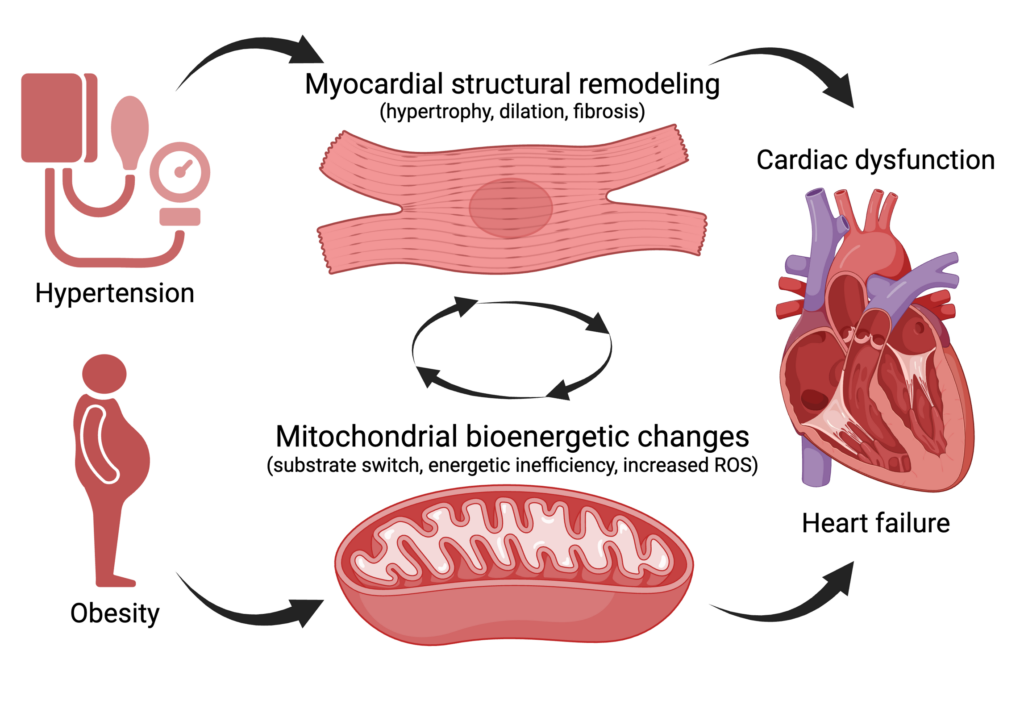
Heart failure with preserved ejection fraction (HFpEF) has recently emerged as an insidious and increasingly prevalent heart failure phenotype now accounting for over 50% of heart failure mortality. HFpEF often occurs in the context of hypertension and systemic metabolic dysregulation and presents with diastolic dysfunction, ventricular hypertrophy, and myocardial fibrosis. While cardiac structural remodeling and bioenergetic changes are two well-known hallmarks of advanced heart disease, the mechanistic and temporal links between early metabolic changes, bioenergetics perturbations, and cardiac structural remodeling in HFpEF remain unclear.
A deeper understanding of the temporal and causal cascades in the early pathogenesis of HFpEF would present attractive therapeutic targets for early intervention, which would greatly benefit a growing population of HFpEF patients with of yet very limited treatment options. Thus, our ongoing research seeks to elucidate the temporal and causal interplay of cardiac mitochondrial bioenergetics and myocardial structural remodeling to determine the causative drivers and downstream consequences of the pathogenic HFpEF cascade.